When the Sweeper Took Shape Behind the Defensive Line
Sweeper in football history: learn how covering space behind the defensive line changed marking, communication and the first pass after winning the ball.
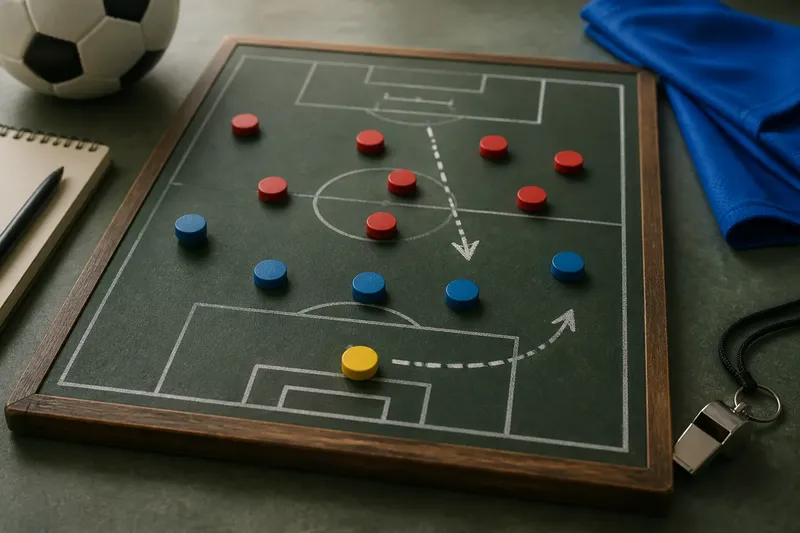
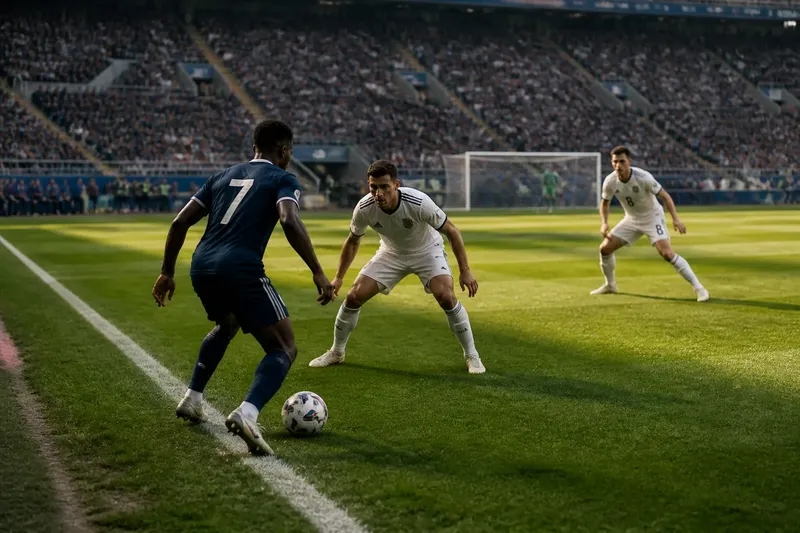
The sweeper in football history is easiest to understand when a centre-back steps out to challenge and an opponent darts into the space behind. A deeper defender can cover that run, but the arrangement also changes who marks, who gives instructions and who starts the next attack.
The sweeper covered the space behind the main line
A defence that moves towards the ball can compress the pitch and support pressure. But if an opponent passes or runs beyond that line, open ground may remain between the defenders and goalkeeper. A sweeper was positioned behind the main defenders to deal with this danger.
The name describes the basic job: clear or intercept threats that had passed the other defenders. Unlike a marker focused on one opponent, the sweeper read the developing attack and moved towards the pass or runner entering the space behind the line.
This was not simply an extra defender standing near the goal. The player had to judge when to close a gap, when to hold position and when to leave an opponent to a team-mate. Every choice affected the defenders ahead.
The position redistributed marking and cover
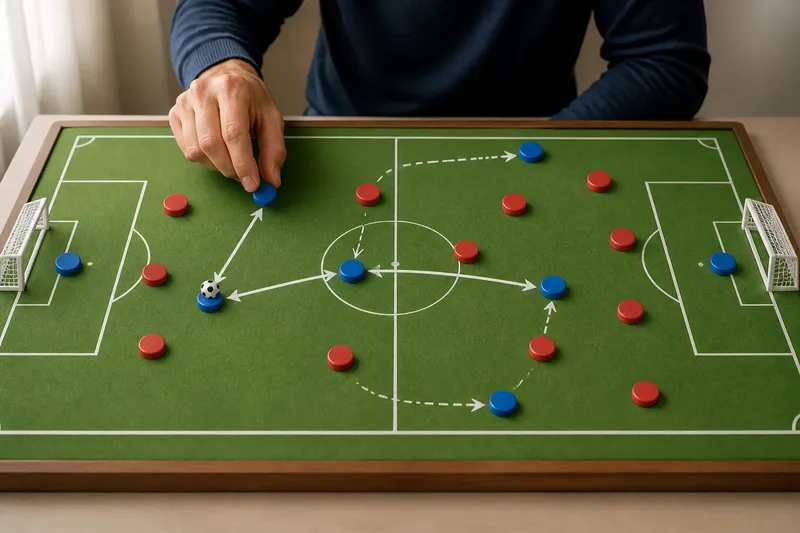
With a sweeper behind them, defenders in front could track opponents more directly. A centre-back might follow a forward dropping towards the ball, while the sweeper stayed ready to cover a runner or pass into the vacated space.
That division offered protection, but only when the defenders coordinated. If a marker followed too far, the gap could become too large to cover. If the sweeper moved forward too early, a pass over the top could leave the goalkeeper exposed. The arrangement depended on shared judgement, not the deeper player’s presence alone.
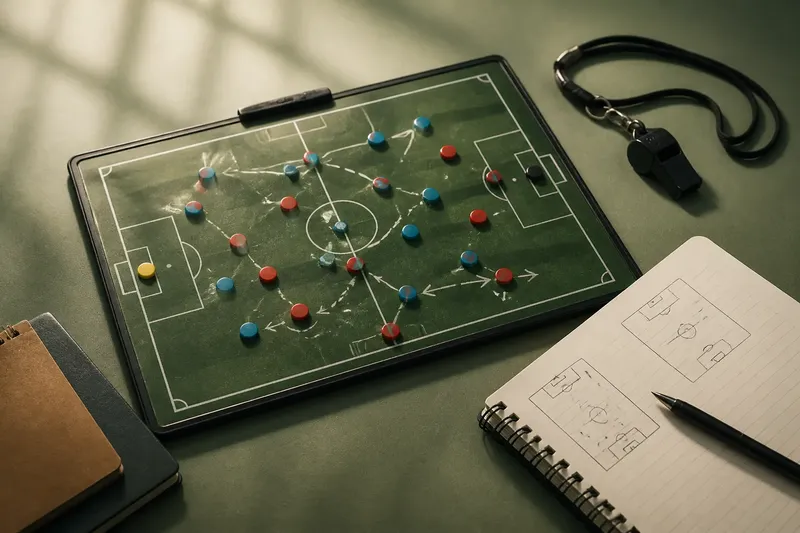
In a flat defensive line, players generally move in relation to one another, stepping up or dropping together. With a sweeper behind, the front defenders could make more individual decisions, while the deeper player had to read the consequences and adjust. The defence became a connected set of responsibilities rather than a single row.
Reading the attack mattered as much as tackling
A sweeper’s work often began before an opponent received the ball. The player watched the passer, the forward’s movement and the defenders’ positions. A suitable starting position made it easier to reach a through ball without being caught flat-footed or drawn too close to the action.
Moving towards the ball could tempt an attacker to run into the space behind; staying too deep could allow an opponent to turn and build an attack. The sweeper had to weigh both risks as the defensive shape changed.
Communication helped because the deeper player could see parts of the field that a defender facing the ball might miss. A call to hold, drop or pass on a runner could help the front defenders act together. But a late call or misunderstood handover could expose the very space the role was meant to protect.
The sweeper could organise as well as cover
In systems that used the position, the sweeper’s view from behind the line could help with organising the defence. The player could spot a forward drifting away from a marker or an opponent finding space between the lines, then direct a team-mate to stay with the runner or close a channel.
This responsibility called for judgement and authority as well as defensive ability. Defenders ahead might press more assertively if they trusted the player behind them to recognise danger. Yet reliance could become a weakness if they stopped managing their own spacing: the sweeper could cover a mistake, but could not make every decision for them.
Some sweepers became launch points for attacks
In teams that asked the sweeper to build play, winning the ball was only the first part of the transition. The player could carry it into space or pass forward before the opposition reset. A position focused on protecting the goal could therefore also become a starting point for an attack.
Stepping out with the ball left the defence without its deepest cover. Team-mates had to notice and adjust, perhaps by dropping into the space or holding a more cautious position. Without that response, the team could lose its protection when possession changed hands.
The ball-playing sweeper also affected the opponent’s pressing choices. Leaving the player free could allow a controlled pass into midfield; closing them down could open space elsewhere. The position’s influence could reach beyond the defensive third because opponents had to account for the player as a passer.
The formation and match situation shaped the sweeper’s depth
A sweeper arrangement depended on the defenders knowing when to preserve depth and when to move forward. Against a fast runner, the deeper player needed room to turn and chase. Against short passing, staying too far back could leave midfield exposed and give the opposition time to find an opening.
That tension makes the role difficult to judge from one moment. A deep position might be ready to meet a pass behind the line; the same distance could become a problem if it allowed an opponent to receive unchallenged in front of the defence. The ball, runners and team-mates’ locations all matter.
Imagine a fictional side facing a forward who repeatedly darts beyond its centre-backs. The coach asks one defender to stay deeper while the others engage the ball. When a pass is played into the forward’s path, that defender moves across to contest it; when the forward checks short, the defender holds position instead of chasing. The observable result is a clearer handover between marking and cover, though the side has fewer defenders immediately engaging the ball.
Why did teams use sweepers less often?
The historical picture varies by team, competition and period, so the sweeper should not be treated as a position that appeared or disappeared everywhere at once. In many contemporary systems, teams defend with a coordinated line and use the goalkeeper or a dropping defender to cover space behind it rather than keeping one player permanently in that role.
The underlying problem remains: teams must decide who protects the space beyond the defenders when the line moves forward. A centre-back can drop to cover a runner, a full-back can narrow in, or a goalkeeper can move out to deal with a long pass. These are situational duties, not necessarily a return to a dedicated sweeper position.
When watching a match, follow the responsibilities rather than relying only on a formation label:
- If one defender consistently stays deeper than the others, then watch whether that player is covering runners; if not, check whether the team is simply dropping into a deeper line.
- If a centre-back follows a forward away from position, then identify who takes over the space; if no one does, watch for the gap the opponent may target.
- If a pass is played behind the line, then track which defender or goalkeeper moves towards it; if nobody can reach it, note how much space the line has left exposed.
- If the deepest defender calls or gestures to team-mates, then watch whether they adjust their spacing; if they do not, look for a delayed handover or a defender left isolated.
- If the deepest defender starts an attack after winning possession, then see whether a team-mate fills the space behind; if nobody does, watch for the counter-attack route left open.
- If the back line steps up together, then check whether the goalkeeper is positioned to cover a long pass; if not, the team may be vulnerable to a ball over the top.
What do viewers ask about the sweeper?
What did a sweeper do in football?
A sweeper played behind the main defensive line and dealt with threats that passed the other defenders. The role could also include organising team-mates and starting attacks after the ball was recovered.
How was a sweeper different from a centre-back?
A centre-back often had a direct marking or line-defending assignment, while a sweeper focused more on covering space and responding to danger behind the defence. Duties could overlap, depending on the team’s system.
Why did some teams stop using a dedicated sweeper?
Many teams came to rely on coordinated defensive lines, with defenders sharing the work of stepping up and covering behind. Goalkeepers and other defenders could also protect that space without one player remaining there permanently.
Does the sweeper still exist in modern football?
The classic fixed position is uncommon in many contemporary systems, but its tasks remain visible when a defender drops behind the line or a goalkeeper covers a through ball. Those actions are usually part of a flexible defensive system rather than a permanent role.
The sweeper’s lasting lesson is that defenders are connected by the space between them. When watching a match, track who takes responsibility for the gap behind the line as it shifts: the answer may be a sweeper, a dropping centre-back or a goalkeeper moving out to cover.